
Digital Transformation & innovation in Manufacturing
Digitalization has brought a new level of complexity to global business, in this article we focus on Digital Transformation
 | 4 minute(s) read | Published on: Nov 07, 2021 Updated on: Jan 14, 2022 |
Since the pandemic's beginning, demand has been increasing for innovation and execution within companies. Manufacturers are embracing disruptive technologies to reach innovation and transformation objectives. Some businesses do not possess the right vision, practices, or capabilities to achieve these goals.
Utilizing the right technologies, alongside refining procedures and methods, can assist manufacturers in aligning data and integrating agility into processes. Embracing digitalization within manufacturing is one-way companies can overcome innovation challenges. They are developing an approach with the correct outlooks, procedures, and difficulty to reach innovation and transformation aims. Digitalization enables many things, for example, the generation of smart factories, intelligent supply chains, and improvements to R&D.
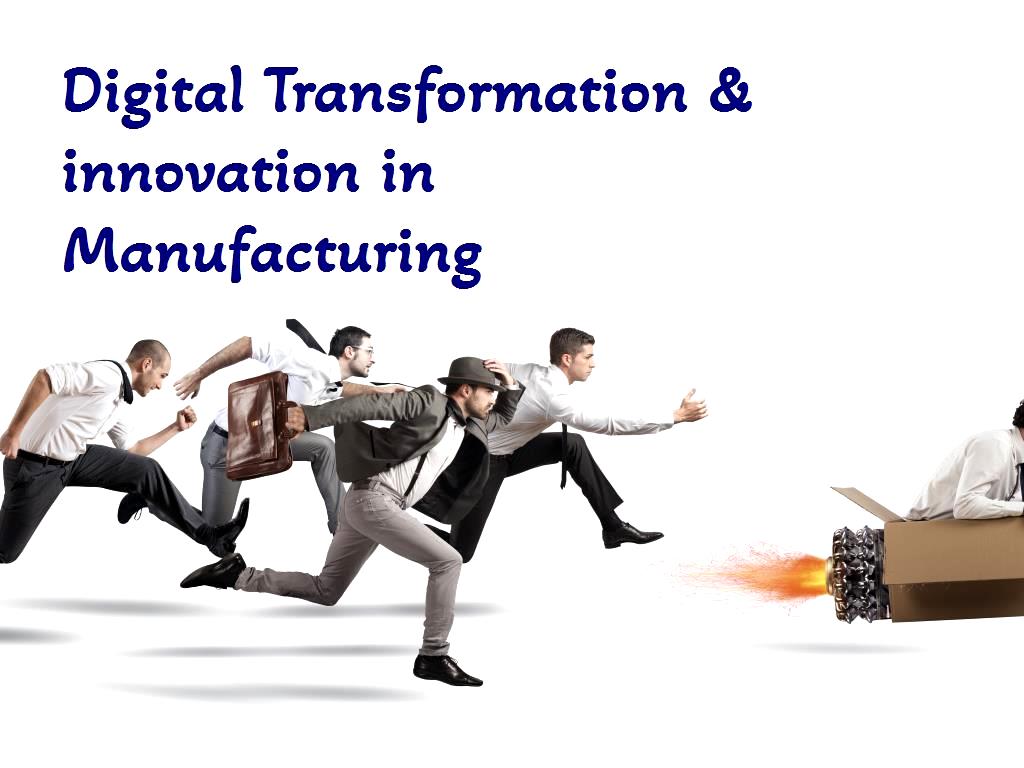
How do we perceive and think about digital transformation and innovation?
How we perceive and think about digital transformation and innovation has changed continually. One factor influencing this is the availability of data. It is now much easier than ever to acquire data in real-time. Digitalization of information from paper to online has meant we can analyze it and make better strategic decisions based on it. Another influencer in how people see the digital transformation is how readily available and accessible it is. In the past, innovation was perceived as a sector of research and development, a science that needed careful planning and long-term consideration. Now, innovation is seen more as a direct business outcome that can be achieved quickly. It is not a long-term option as previously thought of. Innovation is now a disruptive aspect that can change business in the space of a few months.
Digitalization has brought a new level of complexity to global business, with increasing integration across data streams, industries, and segments. It is beneficial to mask this complexity and concentrate on value and results for the end customer to succeed. Forward-thinking manufacturing companies such as Haizol are well equipped to assist small and medium-sized companies with their digitalization efforts and digital manufacturing using the latest technology and streamlining supply chains. Digital innovation brings with it several challenges, it is a complex construct in which everyone wants to achieve the maximum in manufacturing, and everyone strives to be in industry 4.0, with a smart factory environment. With this objective, larger companies typically run several small projects in different factories, which are difficult to measure the effectiveness of in terms of where the value is being derived from, as they are not connected efficiently enough.
The complex aspect of this is that businesses usually have several digital initiatives within their branches. What is best is to focus on one issue at a time that is solvable, thinking about the value from the beginning to the end customer. Keep in mind how it helps the end consumer, and work on one piece of the value chain at a time. Find out your main customer and what you can do for them, and create an initiative to solve it. Then consider at what rate they may adopt this.
What is the impact of COVID on all companies?
COVID has had a huge impact on companies as a whole, including their digital transformation. Research has shown that most manufacturers reported COVID hurting their operations. This negative impact has almost pushed people forward. Overnight, people reduced their road maps from years to months, even weeks. COVID accelerated this transformation and made companies take action on the now, with the perception that was waiting or making long-term roadmaps is no longer an option.
Thinking about the bigger picture allows organizations to become more resilient. Companies realize that disruption of a similar degree is likely to continue shortly. It's about being prepared and ready for that, acquiring the skillset required to support digital transformation over the next decade. COVID accelerated all the pieces of the puzzle. A plan is needed sooner rather than later.
Companies should consider what the future will look like and how to become more resilient by leveraging resilience technologies.
When planning for digitalization, several aspects need to be considered:
- What problem are you trying to solve?
- Do you have access to the data you need
- Are you able to use that data to create a digital twin?
- Combination of taking a problem, making it less complex, evaluating the data you have, take one of two or three pieces of the puzzle to connect the dots, not the whole puzzle.
We've had a massive awakening of the power of digitalization. Understand digitalization is touching every department of every industry. Take it to step by step, understand what it is we are capable of.
Head over to Haizol to connect with one of their team today to see how they can help achieve your digital manufacturing goals.
Click to analyze your wesbite SEO